 by
by 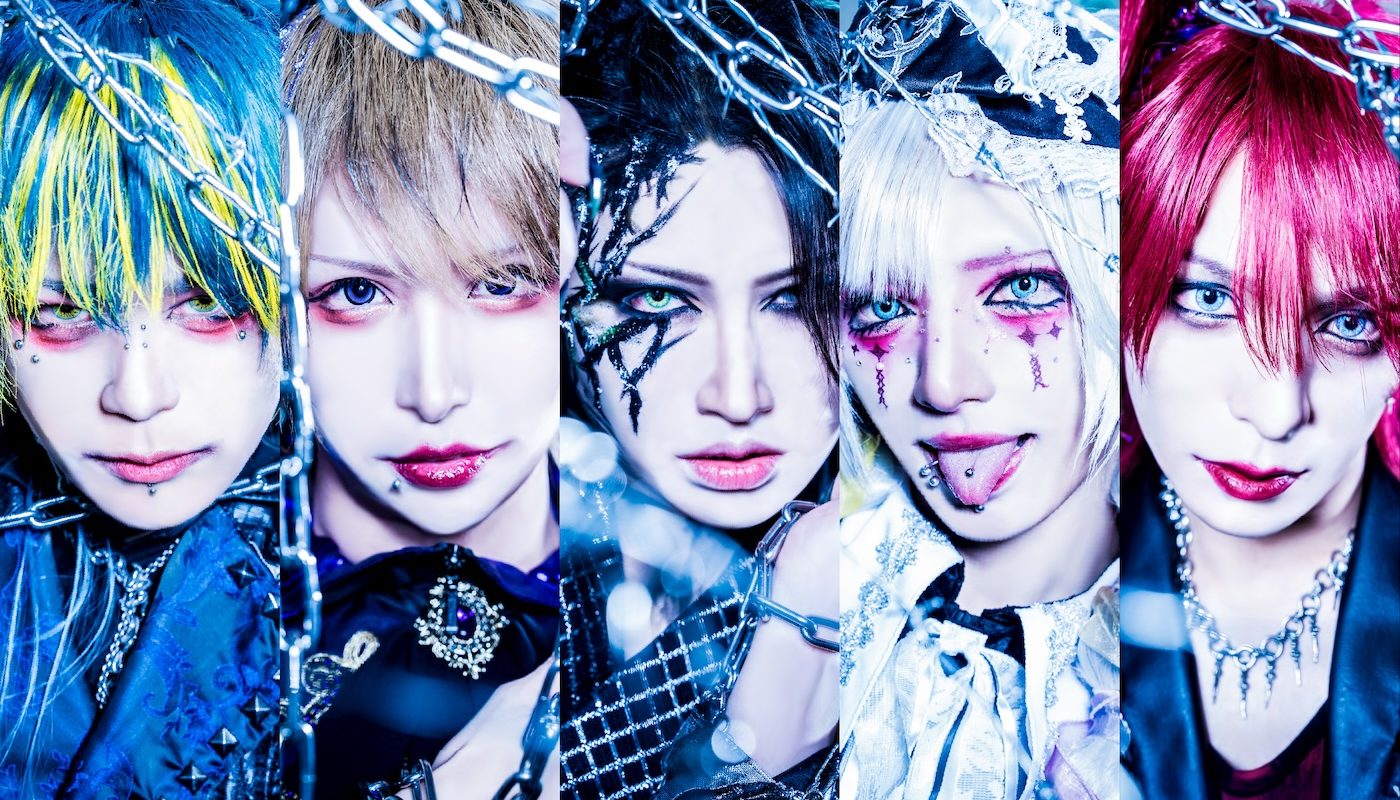
🇫🇷 FRANCAIS | 🇬🇧 ENGLISH | 🇩🇪 DEUTSCH
🇬🇧 ENGLISH
With heavy riffs made for headbanging, guitar solos that are both technical and melodic, powerful vocals, and — icing on the cake — the refined contribution of a talented violinist, LIZA stands out as one of the most promising names on the current Visual Kei scene.
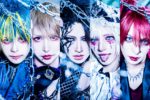
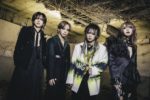
LIZA brings together three musicians — ICE (gt.), Amane (ba.), and #FFFFFF (dr., pronounced Mashiro) — joined by vocalist HIVARI. Roki (gt., vn.) completes this distinctive line-up, adding an extra dimension to the band’s sound. Initially formed under the name M4GNET4R in October 2024, the band officially adopted the name LIZA in June 2025, before holding their very first one-man live, “Art Nouveau”, two months later.
Driven by remarkable momentum, LIZA quickly followed up with a second one-man live in November, along with the release of two digital singles, “ANTARES” and “M4GNET.” On January 13, 2026, the band held its third one-man live, “Art Nouveau #3”, at Ikebukuro EDGE in Tokyo. We had the privilege of attending this performance and wished to share it with you, in order to introduce a band that truly deserves to be discovered by Visual Kei fans around the world.
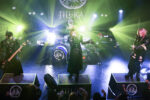
The concert opens with the eponymous opening theme of their one-man lives, “Art Nouveau”. As the curtain rises, all five members are already in position at the front of the stage, immediately presenting a scene that is both striking and unconventional. Frozen in distinct poses, the musicians resemble statues ready to be exhibited at the Louvre. ICE stands with open hands, wrists crossed in front of his face. Amane leans backward, one arm raised above his head. Mashiro, fingers interlaced, keeps his hands at chest level, head lowered. Roki, meanwhile, is bent forward, one hand resting on his forehead.
At the center of this composition, HIVARI embodies the artist surrounded by his works. Holding a canvas, he draws with almost frantic intensity, as if seized by a surge of inspiration that must be urgently transferred onto the surface. Gradually, Mashiro and Amane come to life, breaking their stillness to take their places behind the drums and bass respectively. The two guitarists then emerge from their torpor, moving toward their instruments in turn. Finally, HIVARI, who has continued drawing with an almost obsessive determination, throws his canvas to the ground. Only then can the concert truly begin.
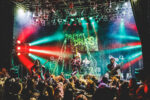
The stage is bathed in a deep crimson light as LIZA sets the tone immediately with the opening notes of “Bijuu” (美獣). Without the slightest warm-up, the audience dives straight into instinctive headbanging, carried by HIVARI’s growls. Roki, ICE, and Amane amplify the impact of the track by providing backing vocals, shouting into their microphones in turn. After a guitar solo where both guitarists play simultaneously — instantly met with raised arms from the fans in encouragement — Amane follows up with a bass solo. An even rarer moment comes next as Mashiro is brought into the spotlight, a beam of white light locking onto him and revealing the full extent of his drumming prowess. The two guitarists don’t hesitate to leap around the stage to rally the crowd during the chorus, before the song comes to a close in a collective headbang, uniting band and audience alike, already fully immersed in the atmosphere of the live.
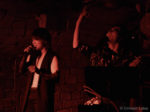
HIVARI then fires off an energetic “Let’s start?!” as a transition, before launching into “Mikan no shouzou” (未完の肖像) with a powerful growl. The five artists dive straight back into relentless headbanging, pulling the audience along with them — a crowd that shows no signs of fatigue and follows every movement with fervor. While the stage is drenched in red light during the growled sections, it shifts to a calmer blue during the chorus, as the vocals turn clean and the atmosphere grows lighter. HIVARI even treats the audience to a vocal solo, immersed in a blue halo, before handing the spotlight to the guitarists, who step forward together at the front of the stage. Fans respond instantly, raising their arms in support. Once again, the song comes to a close in perfect communion, musicians and audience headbanging in unison, moving as one.
The next track, “Shitsuke” (躾), kicks off with a mosh sequence, as the audience moves by hopping alternately to the right and then to the left of the venue, encouraged by HIVARI. Amane joins in as well, getting into motion and making his way over to the right side of the stage. Once again, band and fans headbang in unison in a perfectly synchronized movement, before the crowd grabs their towels and spins them overhead during the chorus. The vocalist paces the stage from right to left, making sure to lock eyes with the entire room, while Amane has fun hyping up the crowd during the mosh sections, signaling for them to move first to the right, then to the left. Far from focusing solely on their performance, the band constantly interacts with the audience, who eagerly return the energy by jumping ever higher and headbanging with increasing intensity.
Next comes the moment of a short, well-deserved break. HIVARI then addresses the crowd: “Thank you for your support for LIZA’s third one-man live. Thank you for coming together here today.” After a few words of gratitude, the vocalist raises the tension once again by inviting the audience to shout. ICE, Roki, and Amane lend their voices as well, shouting into their respective microphones, while HIVARI extends his toward the pit. Fans respond instantly, chanting an energetic “Hey! Hey!” The musicians then switch positions, with ICE even jumping onto the central platform, while HIVARI moves across the stage, calling out “Ushiro!” to urge the fans at the back of the venue to go wild.
The two guitarists then face each other to play together, sharing a moment of palpable chemistry, before “Schadenfreude” (シャーデンフロイデ) unfolds in full force. All four musicians — Mashiro included — provide backing vocals, while HIVARI makes sure to warn the crowd to get ready for headbanging by shouting a powerful “Atama!” (head) into his microphone. Suddenly, right in the middle of the song, the vocalist brings the track to an abrupt halt. The audience immediately begins chanting the names of the band members, under the visibly satisfied gaze of LIZA, before the song launches back in with renewed intensity.
Another powerful growl from HIVARI signals the start of “in the CODEX” as Mashiro hammers away at his drums with impressive intensity. For the fifth song in a row, band and audience engage in energetic headbanging, punctuated by shouts rising from the pit and growls thrown out by the vocalist, all immersed in red and blue lighting effects. While the verses are particularly aggressive, they contrast with a calmer, lighter chorus, enhanced by lighting that gradually softens, shifting from pale blue to white. Roki climbs onto the central platform for his guitar solo, leaning back and completely absorbed in the melody, as Amane and HIVARI face each other to headbang together. If there is one track that truly showcases the power and speed of Mashiro behind his drums, this is undoubtedly this one.
The band then takes another brief pause, as HIVARI temporarily leaves the stage. Mashiro strikes his drums to draw the audience’s attention before speaking up. He begins by thanking the crowd for being there that evening, then opens up a topic of discussion to involve all the members. That night marks the first time the musicians are wearing their new outfits, and the drummer invites each of them to share the detail of their costume they particularly like. Roki highlights the ribbons hanging from his outfit, also pointing out the shimmering aspect of their stage wear. ICE, for his part, says he is especially fond of the shoulder pads on his jacket. Jokingly, Amane then turns to the drummer and calls out to him as “F F F”, only to be immediately corrected by Mashiro: “I’m Mashiro”, prompting laughter from the audience.
HIVARI returns to the stage at that moment, noticing that his bandmates are talking about their new costumes. As for his own, what stands out to him is its shine, as it is largely covered in glitter. “What do you think? Do you like it?” he asks the fans, who respond with warm applause. After this friendly exchange, HIVARI once again thanks the audience for coming to their live and for creating together, through every headbang, every jump, and every raised fist, the most beautiful scene.
The evening continues with “BURLESQUE” As an introduction, each musician is given a solo, gradually building tension before headbanging resumes in full force. Neither band nor fans show any sign of slowing down, with everyone giving it their all to make the night as intense as possible. During the backing vocals, HIVARI extends his microphone toward the pit, placing his hand behind his ear to show that he is eagerly listening to the crowd’s shouts. The atmosphere reaches its peak, with a sense of shared enjoyment clearly felt on both sides of the stage. Fans don’t hesitate to jump while spinning around during the chorus, carried by the track’s infectious energy. The song ends just as it began, with a succession of short solos giving each musician one last chance to shine.
“Asphyxia” (アスフィクシア) follows, opening with HIVARI alone on vocals, accompanied solely by Mashiro, whose playing becomes deliberately more subtle. After an exceptionally long note, held without the slightest sign of difficulty, the song fully unfolds. While seemingly less violent than the previous tracks, it remains no less intense, with headbanging ever-present and offering no respite to a crowd that, far from resisting, responds with equal fervor. A guitar solo by ICE leads into one by Roki, before HIVARI takes over for an almost a cappella passage, supported only by a few delicate strikes from Mashiro on the cymbals, all bathed in white light. The song concludes with a long, powerful note from the vocalist, who remains perfectly still, delivering a finale as striking as it is impressive.
They then move on to “Seikoku” (聖告). In the background, a female voice with lyrical undertones rises, immediately establishing an oppressive and unsettling atmosphere. This tension is further heightened by HIVARI’s posture: leaning forward, almost doubled over, he adopts a disturbing stance as the guitar resonates with a bleak, ominous tone. Slowly, the vocalist straightens up before letting out a deranged laugh that sends chills down the spine. The song stands out through its strong sense of staging, with every element contributing to this dark and oppressive mood. HIVARI urges the audience to project their voices even more, repeatedly exhorting them to scream louder while striking his chest with the microphone and shouting “Louder!”. Roki begins spinning on himself at an impressive speed, while ICE plays arched backward at a striking angle. The song concludes with a powerful visual: bathed in white light, HIVARI sings a cappella, before whispering the lyrics in a breathy voice, almost in tears, hunched over his platform, as if shattered by a pain that is both physical and emotional.
The atmosphere carries on seamlessly with the staging of “Fate Phobia”. Roki momentarily sets aside his guitar to take up his violin and perform the introduction, a melody both beautiful and deeply moving that fills the venue. HIVARI, lying on the floor, then lets out a cry of despair that pierces the soul. Bathed in white light, the scene goes beyond mere emotion to become truly heartrending. The vocalist then rises as the lighting shifts to blue, remaining motionless while Roki returns to his guitar. After a few growls accompanied by headbanging, the chorus softens, creating a striking contrast. Everyone experiences the song with total intensity, fully engaging their bodies: Amane and Roki give themselves over completely to the headbang, while ICE leans dramatically backward as he plays, fully embodying the song’s dramatic tension.
The time then comes for another MC break. HIVARI takes the opportunity to mention the release of their very first album, “THE IMMORTAL PALETTE”, scheduled for January 21, 2026. He also announces the band’s desire to perform a brand-new song that night for the very first time: “Lycoris no hana” (リコリスの華).
While the evening up to that point had been dominated by the violence of the songs and almost nonstop headbanging, LIZA proves with this ballad that the band is equally capable of softness and emotion, leaving the audience quite literally breathless at the song’s beauty. HIVARI begins alone, carried by a piano melody in the background and bathed in a golden glow. Gradually, the rest of the musicians join him as this warm light spreads across the entire stage. A violin then intertwines with the piano, further deepening the song’s emotional dimension.
With the microphone fixed on its stand in front of him, HIVARI sings at times with his hands resting on it, at others letting his body move with the music, opening his arms, reaching forward, multiplying expressive gestures. The musicians, for their part, remain motionless, creating a striking contrast with the agitation of the previous songs. The two guitarists are granted the spotlight for a long unison solo of remarkable beauty, supported in the background by Mashiro’s slow, powerful drum strikes that make the entire venue resonate. Once again, the emotion is palpable.
HIVARI then delivers another showcase of his voice during a solo passage accompanied solely by the piano, immersed in a halo of white light. The other musicians stay still in the darkness, with the exception of ICE, who softly mouths the lyrics to himself, fully absorbed in the song, arms outstretched. All the musicians kick in together in a powerful sonic explosion. The song concludes on a long note held by HIVARI, impressive in its control. A magnificent instrumental outro extends the moment in the same golden light as the introduction, flowing into a guitar solo followed by a violin solo from Roki, played with passion, eyes closed. Remaining motionless throughout this outro, HIVARI ultimately brings the piece to an abrupt end by raising his arm, sealing a moment of rare intensity.
Roki follows up with the violin, performing the introduction to “ANTARES”, accompanied solely by Mashiro’s light strikes on the cymbals. At the same time, HIVARI whispers a few lines into the microphone, before Roki picks up his guitar again and the song fully unfolds. After a brief lull, headbanging makes a powerful comeback, driven by HIVARI’s intense growls as he removes the microphone from its stand and once again takes complete command of the stage.
Even at this late point in the show, Amane still overflows with energy. He gives it his all, singing, jumping, moving to the front of the stage to interact with the audience, leaning forward over his bass and then arching backward, even spinning around without hesitation. Following a twin guitar solo, HIVARI brings the song to a close with a growl, bent over, while the two guitarists and the bassist headbang with all their might. Mashiro, meanwhile, continues playing with his head tilted to the side, embodying the intensity of the moment right through to the end.
As a transition, HIVARI urges the audience to raise their voices, while the stage alternates between pink and green lighting. From the very first notes of the introduction, the crowd instantly recognizes the band’s signature song, “GRIMY CHOCOLATE.” Fans pull out their glow sticks and begin clapping, brimming with anticipation. The song launches into a mosh section, sweeping the entire venue—including the back rows—into a perfectly timed left-to-right movement. If there is one song to give everything to and end up completely exhausted, it is undoubtedly this one.
On stage, the band members display the same desire to have fun, constantly changing positions. ICE joins Roki on the right side of the stage, while Mashiro stands up behind his drums to watch the crowd fully immersed in the mosh. Whether fans or artists, everyone is clearly enjoying themselves, and the song becomes a genuine moment of exchange — both among the musicians and between the band and its audience. The track is deliberately extended, with the mosh section repeated numerous times. HIVARI repeatedly asks, “Are you having fun?”, before urging the crowd to mosh even harder. The fans eagerly comply, hopping their way across nearly half the venue with undiminished energy.
Between each mosh phase, HIVARI decides which furitsuke to perform and clearly signals what he expects from the audience. Depending on his mood, he calls out “Atama” for headbanging, “oritatami,” “teban,” “jump”… the options are endless, and the fans respond with unmistakable joy. The vocalist eventually hands the microphone to ICE, who steps into the center of the stage. Surveying the crowd in full frenzy, he shouts, “3, 2, 1, jump,” triggering a perfectly synchronized collective jump across the entire venue. After a few growls, he returns the microphone to HIVARI, who then passes it to Roki.
Advancing onto the central platform for a guitar solo, Roki calls out to the fans at the back of the venue, making it clear he has not forgotten them. He leads a brief chorus with them before handing the microphone back to the vocalist, who this time passes it to Amane. The bassist takes command, ordering, “Spin!”, and the crowd immediately begins hopping while spinning around. Next, Mashiro shouts “Kakatte koi!” into his microphone, pointing his drumsticks toward the mass of spectators who continue moving from side to side without losing momentum, despite the impressive number of repetitions.
HIVARI, who has spent the entire song roaming the stage to interact with as many fans as possible, finally takes back control by calling out, “Last!”. After one final mosh and a last headbang, the band brings the song to a close amid radiant smiles from both fans and artists alike—everyone fully aware that they have just shared a moment of exchange and enjoyment as intense as it was unforgettable.
Unfortunately, the evening is already drawing to a close, and HIVARI announces the final song. After expressing how happy he is to be on stage that night and offering a few words of gratitude to the audience, the vocalist calls out one last resounding “Last!”, just as the opening notes of “M4GNET4R” echo through the venue.
HIVARI growls while bent over his platform, Amane headbangs with undiminished energy, the two guitarists spin in perfect synchronization, while Mashiro pounds his drums with power. As the concert reaches its conclusion, neither the band nor the fans show the slightest sign of fatigue: everyone continues to give their all until the very last second. After a guitar solo in which the two guitarists unleash rapid phrases with impressive precision, the audience chants “Hey! Hey!” with fists raised, under the visibly satisfied gaze of HIVARI.
Everyone headbangs in rhythm, in a true communion between artists and fans. The three musicians then gather around Mashiro to play facing him, sharing one final moment of camaraderie, before returning to their positions. With a powerful scream from HIVARI, ICE brings the song to a close with his rap part, accompanied by a guitar solo from Roki, bringing the concert to a close as intense as it was unforgettable.
HIVARI then thanks the audience with a simple phrase: “Thank you, this was LIZA”. On a final chord, the concert comes to an end. Mashiro steps away from his drums, the musicians set down their instruments, and line up at the front of the stage. They then strike the exact same pose as at the beginning, standing perfectly still, as if frozen in time. HIVARI delivers one last command to the audience: “Call us!” The venue responds immediately, chanting the names of each band member, as the vocalist drops to his knees, head lowered. The curtains close, bringing this striking performance to a close, despite the warm calls for an encore from a crowd that would have gladly extended this wonderful evening a little longer.
Although LIZA has not yet reached its first anniversary, the band already delivers live performances of remarkable quality, rich in variety. While most of their songs rely on heavy sounds and growls that relentlessly call for headbanging, LIZA has also proven its ability to present beautiful ballads, filled with emotion and capable of striking straight at the heart. HIVARI moves seamlessly between growls, screams, long and powerful sustained notes, and well-controlled high-pitched passages, while the guitar solos impress with both their precision and tight synchronization. Amane is no exception, delivering numerous bass solos and overflowing with energy on stage, while Mashiro stands out for his power and stamina behind the drums. Finally, it is impossible to overlook Roki’s violin, which brings a distinctive touch to the band, along with their ever-present artistic sensibility, evident not only in the song titles and one-man lives, but also in the carefully crafted stage production.
So why not step into the “Art Nouveau” that LIZA invites us to discover?
SETLIST
2026.01.13 – 3rd one-man “Art Nouveau #3”, Ikebukuro EDGE, Tokyo, JAPAN
Art Nouveau (OP SE)
01. 美獣 (Bijuu)
02. 未完の肖像 (Mikan no shouzou)
03. 躾 (Shitsuke)
04. シャーデンフロイデ (Schadenfreude)
05. in the CODEX
06. BURLESQUE
07. アスフィクシア (Asphyxia)
08. 聖告 (Seikoku)
09. Fate Phobia
10. リコリスの華 (Lycoris no hana)
11. ANTARES
12. GRIMY CHOCOLATE
13. M4GNET4R
Links
LIZA X official
HIVARI X official
Roki X official
Amane X official
#FFFFFF X official
LIZA Instagram official
HIVARI Instagram official
Roki Instagram official
ICE Instagram official
Amane Instagram official
#FFFFFF Instagram official
LIZA YouTube
LIZA TikTok
LIZA online store
LIZA schedule
🇫🇷 FRANCAIS
Entre riffs lourds taillés pour le headbang, solos de guitare à la fois techniques et mélodieux, chant puissant et, cerise sur le gâteau, l’apport raffiné d’un violoniste talentueux, LIZA s’impose comme un nom prometteur de la scène visual kei actuelle.
LIZA réunit trois musiciens — ICE (gt.), Amane (ba.) et #FFFFFF (dr., à prononcer Mashiro) — auxquels s’est joint le chanteur HIVARI. Roki (gt., vn.) complète cette line-up singulière, apportant une dimension supplémentaire au son du groupe. Initialement formé sous le nom M4GNET4R en octobre 2024, le groupe adopte finalement le nom LIZA en juin 2025, avant de donner, deux mois plus tard, son tout premier one-man intitulé “Art Nouveau”.
Porté par une dynamique fulgurante, LIZA enchaîne rapidement avec un second one-man en novembre, ainsi que la sortie de deux singles digitaux, “ANTARES” et “M4GNET”. Le 13 janvier 2026, le groupe donnait son troisième one-man, “Art Nouveau #3”, au Ikebukuro EDGE à Tokyo. Nous avons eu l’honneur d’assister à cette représentation et avons souhaité vous la partager, afin de faire découvrir ce groupe qui mérite amplement de se faire connaître auprès des amateurs de visual kei à travers le monde.
Le concert s’ouvre sur l’opening éponyme de leurs one-man, “Art Nouveau”. Le rideau se lève alors sur une scène où les cinq membres sont déjà en place, alignés à l’avant, offrant d’emblée un tableau aussi saisissant qu’inhabituel. Figés dans des postures distinctes, les musiciens évoquent des statues prêtes à être exposées au Louvre. ICE se tient les mains ouvertes, poignets croisés devant le visage. Amane est penché en arrière, un bras levé au-dessus de sa tête. Mashiro, les doigts entrelacés, garde les mains à hauteur de son torse, la tête baissée. Roki, quant à lui, est incliné vers l’avant, la main portée au front.
Au centre de cette composition, HIVARI incarne l’artiste au milieu de ses œuvres. Une toile entre les mains, il dessine avec une intensité presque frénétique, comme happé par un flot d’inspiration qu’il faut impérativement coucher sur le support. Peu à peu, Mashiro et Amane s’animent, quittant leur immobilité pour rejoindre respectivement la batterie et la basse. Les deux guitaristes sortent ensuite de leur torpeur, gagnant leurs instruments à leur tour. Enfin, HIVARI, qui n’a cessé de dessiner avec une forme d’acharnement quasi obsessionnel, projette sa toile au sol. Le concert peut alors véritablement commencer.
La scène se pare d’une lumière rouge sombre tandis que LIZA annonce immédiatement la couleur dès les premières notes de Bijuu (美獣). Sans le moindre échauffement, le public se lance aussitôt dans un headbang instinctif, porté par les growls d’HIVARI. Roki, ICE et Amane viennent renforcer l’impact du morceau en assurant les chœurs, criant à leur tour dans leurs micros. Après un solo de guitare durant lequel les deux guitaristes jouent simultanément, immédiatement soutenus par les fans qui lèvent les bras en signe d’encouragement, Amane enchaîne avec un solo de basse. Moment plus rare encore, Mashiro est ensuite mis en lumière, révélant toute l’étendue de son talent à la batterie, alors qu’un faisceau de lumière blanche se braque sur lui. Les deux guitaristes n’hésitent pas à bondir sur scène pour accompagner la foule lors du refrain, avant que le morceau ne s’achève dans un headbang collectif, réunissant artistes et public, déjà totalement immergés dans l’ambiance du concert.
HIVARI lance alors un énergique “C’est parti ?!” en guise de transition, avant d’entamer Mikan no shouzou (未完の肖像) sur un growl puissant. Les cinq artistes repartent de plus belle dans un headbang effréné, entraînant un public qui ne montre aucune faiblesse et suit le mouvement avec ferveur. Si la scène est baignée d’une lumière rouge lors des passages growlés, celle-ci se transforme en un bleu plus apaisant durant le refrain, lorsque le chant devient clean et l’atmosphère se fait plus légère. HIVARI s’offre même un solo vocal, plongé dans un halo bleu, avant de laisser place aux guitaristes, mis à l’honneur en s’avançant ensemble à l’avant de la scène. Les fans répondent instantanément, bras levés pour les soutenir. Une fois encore, le morceau se conclut dans une parfaite communion, musiciens et public headbanguant à l’unisson, d’un même mouvement.
Le morceau suivant, Shitsuke (躾), démarre sur une séquence de mosh, le public se déplaçant en sautillant alternativement vers la droite puis vers la gauche de la salle, sous les encouragements d’HIVARI. Amane en profite pour se mettre lui aussi en mouvement, allant faire un tour du côté droit de la scène. Une fois encore, artistes et fans headbanguent à l’unisson dans un mouvement parfaitement synchronisé, avant que le public ne s’empare de ses serviettes pour les faire tournoyer en l’air lors du refrain. Le chanteur parcourt la scène de droite à gauche, veillant à capter le regard de l’ensemble de la salle, tandis qu’Amane s’amuse à galvaniser la foule durant les phases de mosh, leur indiquant de se diriger tantôt vers la droite, tantôt vers la gauche. Loin de rester concentré uniquement sur leur performance, le groupe multiplie les interactions avec son public, qui le lui rend bien en sautant toujours plus haut et en headbanguant avec toujours plus d’intensité.
Vient ensuite le moment d’une courte pause bien méritée. HIVARI prend alors la parole : “Merci pour votre soutien pour ce troisième one-man de LIZA. Merci de vous être rassemblés aujourd’hui.” Après quelques mots de gratitude, le chanteur fait encore monter la tension d’un cran en invitant le public à crier. ICE, Roki et Amane donnent de la voix à leur tour dans leurs micros respectifs, tandis qu’HIVARI tend le sien vers la fosse, les fans répondant immédiatement en scandant un énergique “Hey ! Hey !”. Les musiciens échangent ensuite leurs places, ICE allant même jusqu’à sauter sur la plateforme centrale, pendant qu’HIVARI parcourt la scène en lançant des “Ushiro !” pour inciter les fans situés au fond de la salle à se déchaîner.
Les deux guitaristes se retrouvent alors face à face pour jouer ensemble, partageant un moment de complicité palpable, avant que Schadenfreude (シャーデンフロイデ) ne prenne toute son ampleur. Les quatre musiciens, Mashiro compris, assurent les chœurs, tandis qu’HIVARI n’oublie pas de prévenir le public de se préparer au headbang en lançant un puissant “Atama !” dans son micro. Soudain, en plein milieu du morceau, le chanteur interrompt net la chanson. Immédiatement, le public se met à scander les noms des membres du groupe, sous le regard visiblement satisfait de LIZA, avant que le morceau ne reprenne de plus belle.
Un nouveau growl puissant d’HIVARI marque le début de in the CODEX, tandis que Mashiro martèle sa batterie avec une intensité impressionnante. Pour la cinquième chanson consécutive, artistes et public se livrent à un headbang énergique, ponctué de cris venus de la fosse et de growls lancés par le chanteur, le tout baigné dans des jeux de lumières rouges et bleues. Si les couplets se montrent particulièrement violents, ils contrastent avec un refrain plus calme et léger, accentué par des éclairages qui s’adoucissent progressivement, passant du bleu pâle au blanc. Roki grimpe sur la plateforme centrale pour son solo de guitare, se penchant en arrière, totalement absorbé par la mélodie, tandis qu’Amane et HIVARI se font face pour headbanguer ensemble. S’il est un morceau où l’on peut pleinement mesurer la puissance et la rapidité de Mashiro derrière sa batterie, c’est incontestablement celui-ci.
Le groupe marque ensuite une nouvelle pause, alors qu’HIVARI quitte momentanément la scène. Mashiro frappe sa batterie pour capter l’attention avant de prendre la parole. Il commence par remercier le public pour sa présence ce soir-là, puis lance un sujet de discussion afin d’impliquer l’ensemble des membres. Les musiciens portent ce jour-là leur nouveau costume pour la première fois, et le batteur propose à chacun de partager le détail original de sa tenue qu’il apprécie particulièrement. Roki met en avant les rubans qui pendent de son costume, tout en soulignant l’aspect scintillant de leurs tenues. ICE, de son côté, dit affectionner tout particulièrement les épaulettes de sa veste. Sur le ton de la plaisanterie, Amane se tourne alors vers le batteur en l’interpellant par “F F F”, avant d’être immédiatement repris par Mashiro : “Moi, c’est Mashiro” sous les rires du public.
HIVARI revient à ce moment-là sur scène, remarquant que ses musiciens évoquaient leurs nouveaux costumes. En ce qui le concerne, ce qu’il retient du sien, c’est son éclat, car largement recouvert de paillettes. “Vous le trouvez comment ? Vous aimez ?” lance-t-il aux fans, qui répondent par de chaleureux applaudissements. Après cet échange convivial, HIVARI remercie une nouvelle fois le public d’être venu assister à leur live et de créer ensemble, à travers chaque headbang, chaque saut et chaque poing levé, le plus beau des tableaux.
La soirée se poursuit avec BURLESQUE. En guise d’introduction, chaque musicien se voit accorder un solo, installant progressivement la tension avant que le headbang ne reprenne de plus belle. Artistes comme fans ne montrent aucun signe de faiblesse, chacun donnant tout ce qu’il a pour faire de cette soirée un moment intense. Lors des chœurs, HIVARI tend son micro vers la fosse, plaçant sa main derrière son oreille pour signifier qu’il écoute attentivement les cris du public. L’ambiance est à son comble, et l’amusement est palpable des deux côtés de la scène. Les fans n’hésitent pas à sauter en tournoyant sur eux-mêmes lors du refrain, portés par l’énergie communicative du morceau. Celui-ci s’achève comme il avait commencé, par une succession de courts solos laissant à chaque musicien l’occasion de briller une dernière fois.
Asphyxia (アスフィクシア) débute ensuite avec HIVARI seul au chant, accompagné uniquement par Mashiro, dont le jeu se fait volontairement plus discret. Après une note extrêmement longue, tenue sans la moindre difficulté apparente, le morceau se déploie pleinement. Moins violent en apparence que les titres précédents, il n’en demeure pas moins intense, le headbang restant omniprésent et ne laissant aucun répit à un public qui, loin de s’en plaindre, répond avec la même ferveur. Un solo de guitare signé ICE précède celui de Roki, avant qu’HIVARI ne prenne le relais pour un passage presque a cappella, simplement soutenu par quelques frappes délicates de Mashiro sur ses cymbales, le tout baigné d’une lumière blanche. La chanson se conclut sur une note longue et puissante du chanteur, qui reste immobile, offrant un final aussi saisissant qu’impressionnant.
Ils enchaînent ensuite avec Seikoku (聖告). En fond sonore, une voix féminine aux accents lyriques s’élève, installant d’emblée une atmosphère pesante et inquiétante. Cette tension est renforcée par la posture d’HIVARI, penché en avant, presque plié en deux, adoptant une attitude troublante, tandis que la guitare résonne avec une sonorité lugubre. Lentement, le chanteur se redresse, avant de laisser échapper un rire dément, glaçant le sang. Le morceau se distingue par une véritable mise en scène, où chaque élément contribue à cette ambiance sombre et oppressante. HIVARI pousse le public à donner toujours plus de voix, l’exhortant à crier encore plus fort en scandant “Plus fort !” tout en se frappant la poitrine avec son micro. Roki se met à tourner sur lui-même à une vitesse impressionnante, tandis qu’ICE joue courbé en arrière, dans un angle saisissant. Le morceau s’achève sur une scène marquante : sous une lumière blanche, HIVARI chante a cappella, avant de murmurer les paroles d’une voix soufflée, presque en pleurs, penché sur sa plateforme, comme brisé par une douleur à la fois physique et morale.
L’atmosphère se prolonge immédiatement avec la mise en scène de Fate Phobia. Roki délaisse un instant sa guitare pour s’emparer de son violon et interpréter l’introduction, une mélodie à la fois belle et profondément émouvante qui envahit la salle. HIVARI, allongé au sol, pousse alors un cri de désespoir qui transperce l’âme. Baignée d’une lumière blanche, la scène dépasse le simple registre de l’émotion pour devenir véritablement poignante. Le chanteur se relève ensuite, tandis que les lumières virent au bleu, et reste immobile lorsque Roki reprend sa guitare. Après quelques growls accompagnés de headbang, le refrain s’adoucit, offrant un contraste saisissant. Chacun vit le morceau avec une intensité totale, le corps engagé : Amane et Roki se donnent sans retenue dans le headbang, tandis qu’ICE se penche en arrière à l’extrême pour jouer, incarnant pleinement la tension dramatique du titre.
Vient alors le moment d’une nouvelle pause MC. HIVARI en profite pour évoquer la sortie de leur tout premier album, “THE IMMORTAL PALETTE”, prévue pour le 21 janvier 2026. Il annonce également la volonté du groupe d’interpréter ce soir une nouvelle chanson pour la toute première fois : Lycoris no hana (リコリスの華).
Si la soirée avait jusqu’ici été dominée par la violence des morceaux et un headbang quasi incessant, LIZA démontre avec cette ballade que le groupe est aussi capable de douceur et d’émotion, laissant les spectateurs littéralement soufflés par la beauté du titre. HIVARI débute seul, porté par une mélodie de piano en fond, baigné dans une lueur dorée. Peu à peu, l’ensemble des musiciens le rejoint, tandis que cette lumière chaleureuse envahit toute la scène. Un violon s’ajoute alors au piano, enrichissant encore la dimension émotive du morceau.
Le micro fixé sur son pied devant lui, HIVARI chante tantôt les mains posées dessus, tantôt en laissant son corps accompagner la musique, ouvrant les bras, les tendant vers l’avant, multipliant les gestes expressifs. Les musiciens, quant à eux, restent immobiles, offrant un contraste saisissant avec l’agitation des morceaux précédents. Les deux guitaristes se voient accorder l’honneur d’un long solo joué à l’unisson, d’une beauté remarquable, soutenu en arrière-plan par les frappes lentes et puissantes de Mashiro, faisant vibrer la salle entière. L’émotion est une nouvelle fois palpable.
HIVARI offre ensuite une nouvelle démonstration de sa voix lors d’un passage en solo, uniquement accompagné par le piano, plongé dans un halo de lumière blanche. Les autres musiciens demeurent immobiles dans l’obscurité, à l’exception d’ICE, qui murmure les paroles pour lui-même, vivant intensément la chanson, les bras tendus. Tous se rejoignent alors dans une explosion sonore puissante. Le morceau s’achève sur une longue note d’HIVARI, impressionnante de maîtrise. Une magnifique outro instrumentale prolonge ensuite l’instant, dans la lumière dorée du début, enchaînant un solo de guitare puis un solo de violon de Roki, joué avec passion, les yeux clos. Immobile durant toute cette outro, HIVARI met finalement un terme brutal au morceau en levant le bras, scellant un moment d’une rare intensité.
Roki enchaîne au violon avec l’introduction de ANTARES, simplement accompagné par les frappes légères de Mashiro sur ses cymbales. Dans le même temps, HIVARI murmure quelques paroles au micro, avant que Roki ne reprenne sa guitare et que le morceau ne prenne toute son ampleur. Après une courte accalmie, le headbang fait son grand retour, porté par les growls puissants d’HIVARI, qui retire le micro de son pied pour reprendre pleinement possession de la scène.
Même en fin de spectacle, Amane déborde encore d’énergie. Il se donne sans retenue, chantant, sautant, s’avançant sur le devant de la scène pour interagir avec le public, se penchant tour à tour vers l’avant sur sa basse ou vers l’arrière, n’hésitant pas à tourner sur lui-même. Après un double solo de guitare, HIVARI conclut le morceau dans un growl, plié en deux, tandis que les deux guitaristes et le bassiste headbanguent de toutes leurs forces. Mashiro, de son côté, continue de jouer la tête penchée sur le côté, incarnant jusqu’au bout l’intensité du moment.
En guise de transition, HIVARI exhorte les spectateurs à donner de la voix, tandis que la scène se pare tour à tour de lumières roses et vertes. Dès les premières notes de l’introduction, le public comprend qu’il s’agit de leur morceau phare GRIMY CHOCOLATE. Les fans sortent alors leurs bâtons lumineux et commencent à frapper dans leurs mains, impatients. La chanson démarre sur une séquence de mosh, entraînant toute la salle — y compris les rangées du fond — dans un mouvement de gauche à droite parfaitement rythmé. S’il est un morceau sur lequel se dépenser sans compter et finir complètement épuisé, c’est bien celui-ci.
Sur scène, les membres du groupe affichent la même envie de s’amuser, changeant sans cesse de position. ICE vient rejoindre Roki du côté droit de la scène, tandis que Mashiro se lève derrière sa batterie pour observer la foule se livrer au mosh. Qu’il s’agisse des fans ou des artistes, tout le monde semble prendre un plaisir évident, et ce titre devient un véritable moment d’échange, aussi bien entre les musiciens eux-mêmes qu’entre le groupe et son public. Le morceau s’étire volontairement, la section dédiée au mosh étant répétée à de nombreuses reprises. HIVARI demande plusieurs fois: “Vous vous amusez ?”, avant d’encourager la foule à mosher toujours plus loin. Les fans s’exécutent avec enthousiasme, traversant presque la moitié de la salle en sautillant avec une énergie intacte.
Entre chaque phase de mosh, HIVARI décide du furitsuke à effectuer et indique clairement au public ce qu’il attend de lui. Il lance ainsi, au gré de ses envies, “Atama” pour le headbang, “oritatami”, “teban”, “jump”… les possibilités sont multiples, et les fans répondent avec une joie évidente. Le chanteur finit par confier le micro à ICE, qui vient se placer au centre de la scène. Observant la foule en pleine effervescence, il crie alors “3, 2, 1, jump”, déclenchant un saut collectif de toute la salle dans un parfait synchronisme. Après quelques growls, il rend le micro à HIVARI, qui le passe ensuite à Roki. Ce dernier, qui s’était avancé sur la plateforme centrale pour exécuter un solo de guitare, appelle les fans situés au fond de la salle, prouvant qu’il ne les oublie pas. Il entonne un moment de chœurs avec eux, avant de rendre le micro au chanteur, qui le confie cette fois à Amane.
Le bassiste prend alors les commandes en ordonnant “Tournez !”, la foule se mettant aussitôt à sautiller en tournant sur elle-même. C’est ensuite au tour de Mashiro de crier “Kakatte koi !” dans son micro, suivant de ses baguettes tendues la masse de spectateurs qui continue de se déplacer de gauche à droite sans faiblir, malgré le nombre impressionnant de répétitions. HIVARI, qui n’a cessé de parcourir la scène afin d’interagir avec le plus grand nombre possible de fans, reprend finalement les rênes en lançant : “Last !”. Après un ultime mosh et un dernier headbang, le groupe conclut la chanson sous les sourires radieux des fans comme des artistes, tous conscients de venir de partager un moment d’échange et d’amusement aussi intense que mémorable.
Malheureusement, la soirée touche à sa fin et HIVARI annonce déjà le dernier morceau. Après avoir exprimé son bonheur d’être sur scène ce soir-là et adressé quelques mots de gratitude au public, le chanteur lance une ultime fois un retentissant “Last !”, avant que les premières notes de M4GNET4R ne résonnent dans la salle.
HIVARI growle penché sur sa plateforme, Amane headbangue avec une énergie intacte, les deux guitaristes tournent sur eux-mêmes dans une synchronisation parfaite, tandis que Mashiro martèle sa batterie avec puissance. Alors que le concert arrive à son terme, ni le groupe ni les fans ne montrent le moindre signe de fatigue : chacun continue de se donner à fond jusqu’à la toute dernière seconde. Après un solo de guitare durant lequel les deux guitaristes enchaînent des phrases rapides avec une précision impressionnante, le public scande des “Hey ! Hey !”, le poing levé, sous le regard visiblement satisfait d’HIVARI.
Tout le monde headbangue en rythme, dans une véritable communion entre artistes et fans. Les trois musiciens se regroupent alors autour de Mashiro pour jouer face à lui, partageant un ultime moment de complicité entre eux, avant de regagner leur position. Sur un cri puissant d’HIVARI, ICE conclut le morceau avec sa partie rap, accompagné par un solo de guitare de Roki, scellant ainsi une fin de concert aussi intense que mémorable.
HIVARI remercie alors le public d’une simple phrase : “Merci, c’était LIZA”. Sur un dernier accord, le concert prend fin. Mashiro quitte sa batterie, les musiciens reposent leurs instruments et viennent s’aligner à l’avant de la scène. Ils reprennent alors exactement la même pose qu’au début, immobiles, comme figés dans le temps. HIVARI lance une dernière injonction au public : “Criez !”. La salle s’exécute aussitôt, scandant les noms de chacun des membres, tandis que le chanteur se laisse tomber à genoux, la tête baissée. Les rideaux se referment, mettant un point final à cette représentation saisissante, malgré les rappels chaleureux d’un public qui aurait volontiers prolongé encore cette merveilleuse soirée.
Bien que LIZA n’ait même pas un an d’activité à son actif, le groupe propose déjà des lives d’une grande qualité, riches en diversité. Si la majorité des morceaux s’appuie sur des sonorités lourdes et des growls appelant inlassablement au headbang, LIZA a également démontré sa capacité à livrer de superbes ballades, chargées d’émotion et capables de toucher droit au cœur. HIVARI enchaîne avec une aisance remarquable growls, cris, notes longues et puissantes, ainsi que des montées dans les aigus maîtrisées, tandis que les solos de guitare impressionnent par leur précision et leur synchronisation. Amane n’est pas en reste, multipliant les solos de basse et débordant d’énergie sur scène, tandis que Mashiro impressionne par sa puissance et son endurance derrière la batterie. Impossible enfin de passer à côté du violon de Roki, qui apporte une touche singulière au groupe, tout comme sa dimension artistique omniprésente, perceptible aussi bien dans les titres des morceaux et des one-man que dans la mise en scène soignée.
Alors, pourquoi ne pas aller à la rencontre de cet “Art Nouveau” que nous propose LIZA ?
SETLIST
2026.01.13 – 3rd one-man “Art Nouveau #3”, Ikebukuro EDGE, Tokyo, JAPAN
Art Nouveau (OP SE)
01. 美獣 (Bijuu)
02. 未完の肖像 (Mikan no shouzou)
03. 躾 (Shitsuke)
04. シャーデンフロイデ (Schadenfreude)
05. in the CODEX
06. BURLESQUE
07. アスフィクシア (Asphyxia)
08. 聖告 (Seikoku)
09. Fate Phobia
10. リコリスの華 (Lycoris no hana)
11. ANTARES
12. GRIMY CHOCOLATE
13. M4GNET4R
Liens
LIZA X official
HIVARI X official
Roki X official
Amane X official
#FFFFFF X official
LIZA Instagram official
HIVARI Instagram official
Roki Instagram official
ICE Instagram official
Amane Instagram official
#FFFFFF Instagram official
LIZA YouTube
LIZA TikTok
LIZA online store
LIZA schedule
🇩🇪 DEUTSCH
Mit schweren Riffs, die regelrecht zum Headbangen einladen, technisch versierten, melodischen Gitarrensoli, kraftvollem Gesang und – als Sahnehäubchen – dem raffinierten Beitrag eines talentierten Violinisten sticht LIZA als einer der vielversprechendsten Namen der aktuellen Visual-Kei-Szene hervor.
LIZA besteht aus HIVARI (Gesang), ICE (Gitarre), Amane (Bass) und #FFFFFF (Schlagzeug, ausgesprochen Mashiro). Roki (Gitarre, Violine) vervollständigt diese unverwechselbare Besetzung und verleiht dem Sound der Band eine zusätzliche Dimension. Die Band wurde ursprünglich im Oktober 2024 unter dem Namen M4GNET4R gegründet und nahm im Juni 2025 offiziell den Namen LIZA an, bevor sie zwei Monate später ihr erstes One-Man-Live-Konzert „Art Nouveau“ gab.
Angetrieben von einer bemerkenswerten Dynamik folgte LIZA schnell mit einem zweiten One-Man-Live im November, zusammen mit der Veröffentlichung von zwei digitalen Singles, „ANTARES“ und „M4GNET“. Am 13. Januar 2026 gab die Band ihr drittes One-Man-Live, „Art Nouveau #3“, im Ikebukuro EDGE in Tokyo. Wir hatten das Privileg, dieser Performance beizuwohnen, und möchten sie mit euch teilen, um euch eine Band vorzustellen, die es wirklich verdient, von Visual-Kei-Fans auf der ganzen Welt entdeckt zu werden.
Das Konzert beginnt mit dem gleichnamigen Eröffnungsthema ihres One-Man-Lives „Art Nouveau“. Als sich der Vorhang hebt, stehen alle fünf Mitglieder bereits auf der Bühne und präsentieren sofort eine Szene, die sowohl auffällig als auch unkonventionell ist. In unterschiedlichen Posen erstarrt, ähneln die Musiker Statuen, die bereit sind, im Louvre ausgestellt zu werden. ICE steht mit offenen Händen da, die Handgelenke vor seinem Gesicht gekreuzt. Amane lehnt sich zurück, einen Arm über den Kopf erhoben. Mashiro hält seine Hände mit verschränkten Fingern auf Brusthöhe, den Kopf dabei gesenkt. Roki hingegen beugt sich nach vorne, eine Hand auf der Stirn.
Im Zentrum dieser Komposition verkörpert HIVARI den Künstler, umgeben von seinen Werken. Mit einer Leinwand in der Hand malt er mit fast verzweifelter Intensität, als würde er von einer Welle der Inspiration angetrieben, die er dringend auf die Oberfläche übertragen muss. Allmählich erwachen Mashiro und Amane zum Leben und brechen ihre Starre, um ihre Plätze hinter dem Schlagzeug beziehungsweise dem Bass einzunehmen. Die beiden Gitarristen erwachen ebenfalls aus ihrer Lethargie und bewegen sich nacheinander auf ihre Instrumente zu. Schließlich wirft HIVARI, der mit fast obsessiver Entschlossenheit weitergezeichnet hat, seine Leinwand zu Boden. Erst dann kann das Konzert wirklich losgehen.
Die Bühne ist in tiefes Purpurrot getaucht, als LIZA mit den ersten Tönen von „Bijuu“ (美獣) sofort den Ton angeben. Ohne die geringste Aufwärmphase stürzt sich das Publikum direkt in instinktives Headbanging, getragen von HIVARIs Growls. Roki, ICE und Amane verstärken die Wirkung des Songs, indem sie abwechselnd in ihre Mikrofone schreien und den Hintergrundgesang übernehmen. Nach einem Gitarrensolo, bei dem beide Gitarristen gleichzeitig spielen – was sofort von den Fans mit erhobenen Armen und Anfeuerungsrufen quittiert wird –, folgt Amane mit einem Basssolo. Ein noch seltenerer Moment folgt, als Mashiro ins Rampenlicht gerückt wird, ein weißer Lichtstrahl ihn erfasst und das ganze Ausmaß seines Schlagzeugkönnens offenbart. Die beiden Gitarristen zögern nicht, während des Refrains über die Bühne zu springen, um die Menge anzufeuern, bevor der Song in einem kollektiven Headbanging endet, das Band und Publikum, die bereits voll und ganz in die Atmosphäre des Live-Auftritts eingetaucht sind, vereint.
HIVARI gibt dann als Übergang ein energisches „C’est parti?!” ab, bevor er mit einem kraftvollen Growl in „Mikan no shouzou” (未完の肖像) übergeht. Die fünf Künstler stürzen sich direkt wieder in unerbittliches Headbanging und reißen das Publikum mit sich – eine Menge, die keine Anzeichen von Müdigkeit zeigt und jede Bewegung mit Begeisterung mitmacht. Während die Bühne bei den growlenden Passagen in rotes Licht getaucht ist, wechselt dieses während des Refrains zu einem ruhigeren Blau, wenn der Gesang klarer und die Atmosphäre leichter wird. HIVARI verwöhnt das Publikum sogar mit einem Gesangssolo, mit einem blauen Heiligenschein versehen, bevor er das Rampenlicht an die Gitarristen weitergibt, die gemeinsam an den vorderen Rand der Bühne treten. Die Fans reagieren sofort und heben ihre Arme zur Unterstützung. Wieder einmal endet der Song in perfekter Harmonie, Musiker und Publikum headbangen und bewegen sich im Einklang.
Der nächste Song, „Shitsuke“ (躾), beginnt mit einer Mosh-Sequenz, bei der das Publikum, angefeuert von HIVARI, abwechselnd nach rechts und dann nach links hüpft. Auch Amane macht mit, setzt sich in Bewegung und begibt sich zur rechten Seite der Bühne. Wieder einmal headbangen Band und Fans in einer perfekt synchronisierten Bewegung, bevor das Publikum während des Refrains seine Handtücher schnappt und sie über den Köpfen schwenkt. Der Sänger läuft von rechts nach links über die Bühne und achtet darauf, Blickkontakt mit dem gesamten Saal aufzunehmen, während Amane während der Mosh-Passagen Spaß daran hat, die Menge anzuheizen, indem er allen das Signal gibt, sich zuerst nach rechts und dann nach links zu bewegen. Die Band konzentriert sich bei Weitem nicht nur auf ihren Auftritt, sondern interagiert ständig mit dem Publikum, das die Energie eifrig zurückgibt, indem es immer höher springt und mit zunehmender Intensität headbangt.
Als Nächstes folgt eine kurze, wohlverdiente Pause. HIVARI wendet sich dann an das Publikum: „Vielen Dank für eure Unterstützung bei LIZAs drittem Solo-Live-Konzert. Danke, dass ihr heute alle hierher gekommen seid.“ Nach einigen Dankesworten steigert der Sänger erneut die Spannung, indem er das Publikum zum Mitrufen auffordert. ICE, Roki und Amane stimmen ebenfalls mit ein und rufen in ihre jeweiligen Mikrofone, während HIVARI sein Mikrofon in Richtung des Pits streckt. Die Fans reagieren sofort und singen energisch „Hey! Hey!“. Die Musiker wechseln anschließend ihre Positionen, wobei ICE sogar auf die zentrale Plattform springt, während HIVARI über die Bühne läuft und „Ushiro!“ ruft, um die Fans im hinteren Teil des Saals anzufeuern, alles zu geben.
Die beiden Gitarristen stehen sich dann gegenüber, um Seite an Seite zu spielen, bevor „Schadenfreude“ (シャーデンフロイデ) mit voller Kraft entfaltet wird. Alle vier Musiker – einschließlich Mashiro – sorgen für den Hintergrundgesang, während HIVARI das Publikum mit einem lauten „Atama!“ in sein Mikrofon darauf vorbereitet, sich auf Headbanging einzustellen. Plötzlich, mitten im Song, bricht der Sänger den Track abrupt ab. Das Publikum beginnt sofort, die Namen der Bandmitglieder zu rufen, unter dem sichtlich zufriedenen Blick von LIZA, bevor der Song mit neuer Intensität wieder einsetzt.
Ein weiteres kraftvolles Growlen von HIVARI signalisiert den Beginn von „in the CODEX“, während Mashiro mit beeindruckender Intensität auf sein Schlagzeug eindrischt. Zum fünften Mal in Folge liefern sich Band und Publikum ein energiegeladenes Headbanging, unterbrochen von Rufen aus dem Pit und den Growls des Sängers, allesamt eingetaucht in rote und blaue Lichtspiele. Die besonders aggressiven Strophen stehen im Kontrast zu einem ruhigeren, leichteren Refrain, der durch eine allmählich weicher werdende Beleuchtung, die von Blassblau zu Weiß wechselt, noch verstärkt wird. Roki klettert für sein Gitarrensolo auf die zentrale Plattform, lehnt sich zurück und ist völlig in die Melodie vertieft, während Amane und HIVARI sich gegenüberstehen und gemeinsam headbangen. Wenn es einen Track gibt, der die Kraft und Geschwindigkeit von Mashiro hinter dem Schlagzeug wirklich zur Geltung bringt, dann ist es zweifellos dieser.
Die Band macht dann eine weitere kurze Pause, während HIVARI vorübergehend die Bühne verlässt. Mashiro schlägt auf sein Schlagzeug, um die Aufmerksamkeit des Publikums auf sich zu lenken, bevor er das Wort ergreift. Er bedankt sich zunächst bei den Zuschauern für ihr Kommen und leitet dann ein Gespräch ein, an dem alle Bandmitglieder teilnehmen. An diesem Abend tragen die Musiker zum ersten Mal ihre neuen Outfits, und der Schlagzeuger bittet jeden von ihnen, etwas über ein Detail seines Kostüms zu erzählen, das ihm besonders gut gefällt. Roki hebt die Bänder hervor, die an seinem Outfit hängen, und weist auch auf den schimmernden Aspekt ihrer Bühnenkleidung hin. ICE seinerseits sagt, dass ihm die Schulterpolster an seiner Jacke besonders gut gefallen. Scherzhaft wendet sich Amane dann an den Schlagzeuger und ruft ihm „F F F“ zu, woraufhin Mashiro ihn sofort korrigiert: „Es heißt Mashiro“, was das Publikum zum Lachen bringt.
In diesem Moment kehrt HIVARI auf die Bühne zurück und bemerkt, dass seine Bandkollegen über ihre neuen Kostüme sprechen. Was sein eigenes Kostüm angeht, fällt ihm vor allem dessen Glanz auf, da es größtenteils mit Glitzer bedeckt ist. „Was haltet ihr davon? Gefällt es euch?“, fragt er die Fans, die mit herzlichem Applaus antworten. Nach diesem freundlichen Austausch bedankt sich HIVARI erneut beim Publikum dafür, dass es zu ihrem Live-Auftritt gekommen ist und gemeinsam – durch jedes Headbangen, jeden Sprung und jede erhobene Faust – das schönste Bild geschaffen hat.
Der Abend geht weiter mit „BURLESQUE“. Als Einleitung bekommt jeder Musiker ein Solo, wodurch sich die Spannung allmählich aufbaut, bevor das Headbangen wieder mit voller Kraft losgeht. Weder die Band noch die Fans zeigen Anzeichen einer Verlangsamung, alle geben ihr Bestes, um die Nacht so intensiv wie möglich zu gestalten. Während des Hintergrundgesangs streckt HIVARI sein Mikrofon in Richtung Pit und legt seine Hand hinter sein Ohr, um zu zeigen, dass er gespannt den Rufen der Menge lauscht. Die Atmosphäre erreicht ihren Höhepunkt, und auf beiden Seiten der Bühne ist deutlich zu spüren, wie viel Spaß alle haben. Die Fans zögern nicht, während des Refrains zu springen und sich zu drehen, getragen von der ansteckenden Energie des Songs. Der Song endet so, wie er begonnen hat, mit einer Abfolge von kurzen Soli, die jedem Musiker eine letzte Chance geben, zu glänzen.
Es folgt „Asphyxia“ (アスフィクシア), das mit HIVARI als alleinigem Sänger beginnt, begleitet nur von Mashiro, dessen Spiel bewusst zurückhaltender wird. Nach einer außergewöhnlich langen Note, die ohne die geringste Anstrengung gehalten wird, entfaltet sich der Song vollständig. Obwohl er weniger heftig als die vorherigen Titel wirkt, bleibt er nicht weniger intensiv, mit ständigem Headbanging, das dem Publikum keine Atempause gönnt – die Zuschauer reagieren mit gleicher Leidenschaft. Ein Gitarrensolo von ICE leitet über zu einem von Roki, bevor HIVARI für eine fast a cappella gesungene Passage übernimmt, unterstützt nur von einigen zarten Schlägen Mashiros auf die Becken. Alles ist in weißes Licht getaucht. Der Song endet mit einer langen, kraftvollen Note des Sängers, der vollkommen still steht und ein ebenso eindrucksvolles wie beeindruckendes Finale liefert.
Anschließend gehen sie zu „Seikoku“ (聖告) über. Im Hintergrund erhebt sich eine weibliche gedämpfte Stimme, die sofort eine bedrückende und beunruhigende Atmosphäre schafft. Diese Spannung wird durch HIVARIs Körperhaltung noch verstärkt: Er beugt sich nach vorne, fast bis zur Hälfte, und nimmt eine verstörende Haltung ein, während die Gitarre mit einem düsteren, unheilvollen Ton mitschwingt. Langsam richtet sich der Sänger auf, bevor er ein verstörendes Lachen ausstößt, das einem Schauer über den Rücken jagt. Der Song zeichnet sich durch seine starke Inszenierung aus, wobei jedes Element zu dieser dunklen und bedrückenden Stimmung beiträgt. HIVARI fordert das Publikum auf, seine Stimmen noch mehr zu erheben, und ermahnt es wiederholt, lauter zu schreien, während er sich mit dem Mikrofon auf die Brust schlägt und „Lauter!“ ruft. Roki beginnt, sich mit beeindruckender Geschwindigkeit zu drehen, während ICE weit nach hinten gelehnt spielt. Der Song endet mit einem kraftvollen Bild: In weißem Licht singt HIVARI a cappella, bevor er den Text mit flüsternder Stimme, fast unter Tränen, über seine Plattform gebeugt flüstert, als wäre er von körperlichem und emotionalem Schmerz erschüttert.
Die Atmosphäre setzt sich nahtlos mit der Inszenierung von „Fate Phobia“ fort. Roki legt kurz seine Gitarre beiseite, um seine Geige zu nehmen und die Einleitung zu spielen, eine Melodie, die sowohl schön als auch tief bewegend ist und den Veranstaltungsort erfüllt. HIVARI, der auf dem Boden liegt, stößt dann einen Schrei der Verzweiflung aus, der die Seele durchdringt. Nach wie vor von weißem Licht umgeben, geht die Szene über bloße Emotionen hinaus und wird wirklich herzzerreißend. Der Sänger erhebt sich, während die Beleuchtung zu Blau wechselt, und bleibt regungslos stehen, während Roki zu seiner Gitarre zurückkehrt. Nach ein paar Growls, begleitet von Headbanging, wird der Refrain sanfter und schafft einen auffälligen Kontrast. Alle erleben den Song mit voller Intensität und setzen ihren Körper voll ein: Amane und Roki geben sich ganz dem Headbanging hin, während ICE sich beim Spielen dramatisch nach hinten lehnt und die Spannung des Songs voll und ganz verkörpert.
Dann ist es Zeit für eine weitere MC-Pause. HIVARI nutzt die Gelegenheit, um die Veröffentlichung ihres allerersten Albums „THE IMMORTAL PALETTE“ anzukündigen, das für den 21. Januar 2026 geplant ist. Außerdem verkündet er, dass die Band an diesem Abend zum ersten Mal einen brandneuen Song aufführen wird: „Lycoris no hana“ (リコリスの華).
Während der Abend bis zu diesem Zeitpunkt von der Gewalt der Songs und fast ununterbrochenem Headbangen geprägt war, beweisen LIZA mit dieser Ballade, dass sie ebenso zu Sanftheit und Emotionen fähig sind und lassen das Publikum angesichts der Schönheit des Songs buchstäblich atemlos zurück. HIVARI beginnt allein, getragen von einer Klaviermelodie im Hintergrund und in goldenem Licht stehend. Nach und nach schließen sich ihm die anderen Musiker an, während sich dieses warme Licht über die gesamte Bühne ausbreitet. Eine Geige verwebt sich dann mit dem Klavier und vertieft die emotionale Dimension des Songs noch weiter.
HIVARI singt mal mit den Händen auf dem Mikrofonständer ruhend, mal lässt er seinen Körper zur Musik bewegen – er öffnet seine Arme, streckt sich nach vorne und vervielfacht seine ausdrucksstarken Gesten. Die Musiker hingegen bleiben regungslos und bilden einen starken Kontrast zu der Unruhe der vorherigen Songs. Die beiden Gitarristen stehen im Rampenlicht und spielen ein langes Solo von bemerkenswerter Schönheit, unterstützt von Mashiros langsamen, kraftvollen Drumschlägen im Hintergrund, die den gesamten Veranstaltungsort zum Schwingen bringen. Wieder einmal ist die Emotion greifbar.
HIVARI präsentiert dann erneut seine Stimme während einer Solo-Passage, begleitet nur vom Klavier, gebadet in einem weißen Lichtschein. Die anderen Musiker bleiben still in der Dunkelheit stehen, mit Ausnahme von ICE, der den Text lautlos für sich selbst mitsingt, völlig in den Song vertieft, die Arme ausgestreckt. Dann kommen alle in einer kraftvollen Klangexplosion zusammen. Der Song endet mit einer langen Note, die HIVARI mit beeindruckender Kontrolle hält. Ein großartiges instrumentales Outro verlängert den Moment im gleichen goldenen Licht wie zu Beginn und geht in ein Gitarrensolo über, gefolgt von einem Violinensolo von Roki, der mit geschlossenen Augen voller Leidenschaft spielt. HIVARI bleibt während dieses Outros regungslos und beendet das Stück schließlich abrupt, indem er seinen Arm hebt und so einen Moment von seltener Intensität besiegelt.
Roki folgt mit der Violine und spielt die Einleitung zu „ANTARES“, begleitet nur von Mashiros leichten Schlägen auf die Becken. Gleichzeitig flüstert HIVARI ein paar Zeilen ins Mikrofon, bevor Roki wieder zur Gitarre greift und der Song sich voll entfaltet. Nach einer kurzen Pause kehrt das Headbanging mit voller Wucht zurück, angetrieben von HIVARIs intensiven Growls, während er das Mikrofon aus der Halterung nimmt und erneut die vollständige Kontrolle über die Bühne übernimmt.
Selbst zu diesem späten Zeitpunkt der Show strotzt Amane noch vor Energie. Er gibt sich ohne Zurückhaltung hin – er singt, springt, bewegt sich an den vorderen Rand der Bühne, um mit dem Publikum zu interagieren, beugt sich über seinen Bass und reckt sich dann nach hinten, dreht sich sogar ohne zu zögern um sich selbst. Nach einem doppelten Gitarrensolo beendet HIVARI den Song mit einem Growl, während er sich vornüberbeugt und die beiden Gitarristen und der Bassist mit aller Kraft headbangen. Mashiro spielt unterdessen mit zur Seite geneigtem Kopf weiter und verkörpert die Intensität des Augenblicks bis zum Ende.
Als Übergang fordert HIVARI das Publikum auf, seine Stimme zu erheben, während die Bühne zwischen rosa und grüner Beleuchtung wechselt. Schon bei den ersten Tönen der Einleitung erkennt die Menge sofort den Signature-Song der Band, „GRIMY CHOCOLATE“. Die Fans holen ihre Leuchtstäbe heraus und beginnen voller Vorfreude zu klatschen. Der Song mündet in einen Mosh-Part, der den gesamten Saal – einschließlich der hinteren Reihen – in eine perfekt getimte Bewegung von links nach rechts mitreißt. Wenn es einen Song gibt, bei dem man alles geben und am Ende völlig erschöpft sein kann, dann ist es dieser.
Auf der Bühne zeigen die Bandmitglieder, dass sie ebenso viel Spaß haben, und wechseln ständig ihre Positionen. ICE gesellt sich zu Roki auf der rechten Seite der Bühne, während Mashiro hinter seinem Schlagzeug aufsteht, um das Publikum zu beobachten, das sich voll und ganz dem Moshen hingibt. Ob Fans oder Künstler, alle haben sichtlich Spaß, und der Song wird zu einem echten Moment des Austauschs – sowohl zwischen den Musikern als auch zwischen der Band und ihrem Publikum. Der Track wird bewusst verlängert, wobei der Mosh-Teil mehrfach gespielt wird. HIVARI fragt wiederholt: „Habt ihr Spaß?“, bevor er das Publikum dazu auffordert, noch heftiger zu moshen. Die Fans kommen dieser Aufforderung eifrig nach und hüpfen mit ungebrochener Energie fast durch die Hälfte des Veranstaltungsortes.
Zwischen den einzelnen Mosh-Phasen entscheidet HIVARI, welche Furitsuke er aufführen möchte, und signalisiert dem Publikum deutlich, was er von ihm erwartet. Je nach Stimmung ruft er „Atama“ für Headbanging, „Oritatami“, „Teban“, „Jump“… Die Möglichkeiten sind endlos, und die Fans reagieren mit unverkennbarer Freude. Schließlich reicht der Sänger das Mikrofon an ICE weiter, der in die Mitte der Bühne tritt. Er blickt auf die völlig ausflippende Menge und ruft „3, 2, 1, jump“, woraufhin ein perfekt synchronisierter kollektiver Sprung im gesamten Saal folgt. Nach ein paar Growls gibt er das Mikrofon an HIVARI zurück, der es dann an Roki weiterreicht.
Roki begibt sich für ein Gitarrensolo auf die zentrale Plattform und ruft den Fans im hinteren Teil des Saals zu, um ihnen zu zeigen, dass er sie nicht vergessen hat. Er singt mit ihnen einen kurzen Refrain, bevor er das Mikrofon wieder an den Sänger zurückgibt, der es diesmal an Amane weiterreicht. Der Bassist übernimmt das Kommando und ruft: „Spin!“, woraufhin die Menge sofort anfängt zu hüpfen und sich dabei im Kreis zu drehen. Als Nächstes ruft Mashiro „Kakatte koi!“ in sein Mikrofon und zeigt mit seinen Drumsticks auf die Zuschauer, die sich trotz der beeindruckenden Anzahl von Wiederholungen ohne Schwungverlust weiter von einer Seite zur anderen bewegen.
HIVARI, der während des gesamten Songs über die Bühne getobt ist, um mit möglichst vielen Fans zu interagieren, übernimmt schließlich wieder die Kontrolle und ruft: „Last!“. Nach einem letzten Moshpit und einem letzten Headbangen beendet die Band den Song inmitten strahlender Gesichter – alle sind sich bewusst, dass sie gerade einen Moment des Austauschs und der Freude geteilt haben, der ebenso intensiv wie unvergesslich war.
Leider neigt sich der Abend bereits dem Ende zu, und HIVARI kündigt den letzten Song an. Nachdem er seine Freude darüber zum Ausdruck gebracht hat, an diesem Abend auf der Bühne zu stehen, und sich mit einigen Worten beim Publikum bedankt hat, ruft der Sänger ein letztes Mal laut „Last!“, gerade als die ersten Töne von „M4GNET4R“ durch den Saal hallen.
HIVARI growlt, während er sich über seine Plattform beugt, Amane headbangt mit unverminderter Energie, die beiden Gitarristen drehen sich perfekt synchron, während Mashiro mit voller Kraft auf sein Schlagzeug schlägt. Als das Konzert seinem Ende entgegengeht, zeigen weder die Band noch die Fans die geringsten Anzeichen von Müdigkeit: Alle geben bis zur letzten Sekunde ihr Bestes. Nach einem Gitarrensolo, in dem die beiden Gitarristen rasante Phrasen mit beeindruckender Präzision spielen, skandiert das Publikum mit erhobenen Fäusten „Hey! Hey!“, unter dem sichtlich zufriedenen Blick von HIVARI.
Alle headbangen im Rhythmus, in einer echten Gemeinschaft zwischen Künstlern und Fans. Die drei Musiker versammeln sich dann um Mashiro, um ihm gegenüber zu spielen, und teilen einen letzten Moment der Kameradschaft, bevor sie zu ihren Positionen zurückkehren. Mit einem kraftvollen Schrei von HIVARI beendet ICE den Song mit seinem Rap-Part, begleitet von einem Gitarrensolo von Roki, und besiegelt damit ein ebenso intensives wie unvergessliches Konzertfinale.
HIVARI bedankt sich dann mit einem einfachen Satz beim Publikum: „Danke, das war LIZA.“ Mit einem letzten Akkord endet das Konzert. Mashiro tritt von seinem Schlagzeug zurück, die Musiker legen ihre Instrumente beiseite und stellen sich vorne auf der Bühne auf. Dann nehmen sie genau dieselbe Pose wie zu Beginn ein und stehen vollkommen still da, als wären sie in der Zeit eingefroren. HIVARI gibt dem Publikum einen letzten Befehl: „Schreit!“ Das Publikum reagiert sofort und ruft die Namen der einzelnen Bandmitglieder, während der Sänger auf die Knie fällt und den Kopf senkt. Der Vorhang schließt sich und beendet diese beeindruckende Darbietung, trotz der lauten Zugabe-Rufe einer Menge, die diesen wunderbaren Abend gerne noch ein wenig verlängert hätte.
Obwohl LIZA noch nicht einmal ein Jahr alt sind, liefert die Band bereits Live-Auftritte von bemerkenswerter Qualität und großer Vielfalt. Während die meisten ihrer Songs auf harte Sounds und Growls setzen, die unerbittlich zum Headbangen auffordern, stellten LIZA auch ihre Fähigkeit unter Beweis, wunderschöne Balladen zu präsentieren, die voller Emotionen sind und direkt ins Herz treffen. HIVARI wechselt nahtlos zwischen Growls, Screams, langen und kraftvollen Tönen und gut kontrollierten hohen Passagen, während die Gitarrensoli sowohl durch ihre Präzision als auch durch ihre perfekte Synchronisation beeindrucken. Amane ist keine Ausnahme, liefert zahlreiche Bass-Soli und sprüht auf der Bühne vor Energie, während Mashiro durch seine Kraft und Ausdauer hinter dem Schlagzeug auffällt. Schließlich ist auch Rokis Violine nicht zu übersehen, die der Band einen unverwechselbaren Touch verleiht, ebenso wie seine allgegenwärtige künstlerische Sensibilität, die sich nicht nur in den Songtiteln und One-Man-Lives, sondern auch in der sorgfältig ausgearbeiteten Bühnenproduktion zeigt.
Warum also nicht in jene „Art Nouveau“ eintauchen, die LIZA uns entdecken lässt?
SETLIST
2026.01.13 – 3rd one-man “Art Nouveau #3”, Ikebukuro EDGE, Tokyo, JAPAN
Art Nouveau (OP SE)
01. 美獣 (Bijuu)
02. 未完の肖像 (Mikan no shouzou)
03. 躾 (Shitsuke)
04. シャーデンフロイデ (Schadenfreude)
05. in the CODEX
06. BURLESQUE
07. アスフィクシア (Asphyxia)
08. 聖告 (Seikoku)
09. Fate Phobia
10. リコリスの華 (Lycoris no hana)
11. ANTARES
12. GRIMY CHOCOLATE
13. M4GNET4R
Weblinks
LIZA X official
HIVARI X official
Roki X official
Amane X official
#FFFFFF X official
LIZA Instagram official
HIVARI Instagram official
Roki Instagram official
ICE Instagram official
Amane Instagram official
#FFFFFF Instagram official
LIZA YouTube
LIZA TikTok
LIZA online store
LIZA schedule
![JILUKA - 11th anniversary one-man live 「JLK-ANNIVERSARY 2026」(Tokyo, Shibuya DIVE, 2026.02.06)]()
JILUKA - 11th anniversary one-man live 「JLK-ANNIVERSARY 2026」(Tokyo, Shibuya DIVE, 2026.02.06)
![DRUGS - 2nd one-man【THE NORMAL】(Tokyo, Spotify O-WEST, 2026.02.17)]()
DRUGS - 2nd one-man【THE NORMAL】(Tokyo, Spotify O-WEST, 2026.02.17)
![LIZA - 1st album THE IMMORTAL PALETTE, trailer and new look]()
LIZA - 1st album "THE IMMORTAL PALETTE", trailer and new look
![Fukuro - ROAD TO EUROPE (Paris, le Zèbre de Belleville, 2025/07/12)]()
Fukuro - ROAD TO EUROPE (Paris, le Zèbre de Belleville, 2025/07/12)
![G.L.A.M.S - Euro tour 2024 (Paris, Le Klub, 2024/11/27)]()
G.L.A.M.S - Euro tour 2024 (Paris, Le Klub, 2024/11/27)
![FEST VAINQUEUR 2024 FREE ONEMAN『LIVE ADDICTS』(Tokyo, 2024.10.07)]()
FEST VAINQUEUR 2024 FREE ONEMAN『LIVE ADDICTS』(Tokyo, 2024.10.07)